Note: I have written this case study in 2015 during my time as a Young Professional at the Society for Elimination of Rural Poverty (SERP), Telangana. It was developed with guidance from Sitaramachandra Machiraju and Vijeta Rao Bejjanki. This was my first time leading a field intervention and my first success. I am reproducing it here in its original form, without any changes. The data, figures, and context reflect the situation at that time.
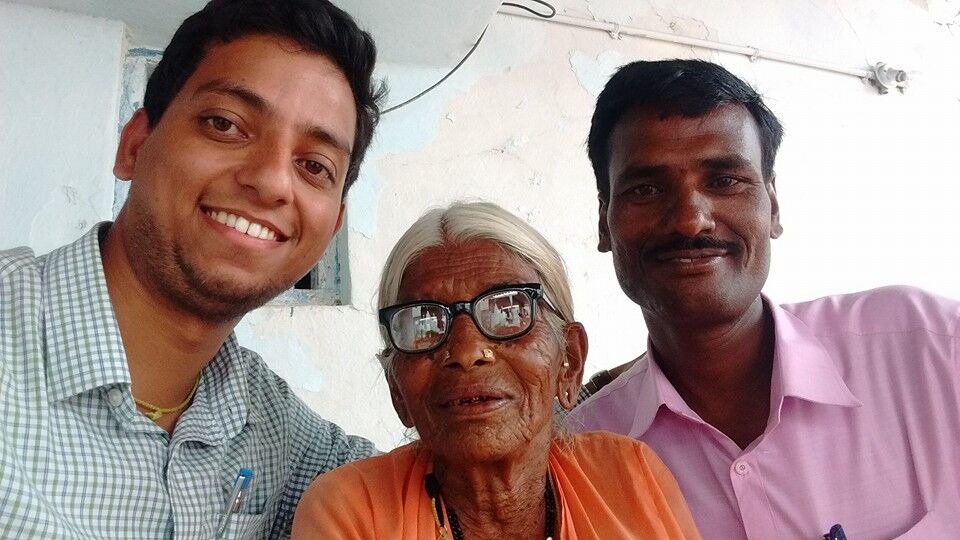
“We are the most vulnerable social class when it comes to toilet. For safety, security and protecting the dignity of women, elimination of open defecation is required. Until now, going to toilet was risky. We had to wait till sun sets and there was always the danger of being bitten by poisonous animals or being seen by men. Now my life has changed remarkably, I use my own toilet constructed within my house, I can keep my head high. I suffered a lot over the past years, but now I am safe”, beamed Kanakmma, the treasurer of Balaji Village Organization (VO) of Thimmapur village who, along with other women, played a critical role in achieving ‘Open Defecation Free status (ODF)’ for Thimmapur.
This story is not the result of any miracle; it is an outcome of concerted efforts- of a community and their courage and desire to achieve better standards of living through collective action. It is a testament to toil. It is a depiction of how things change when people desire for change, and act for it. Rural poor women from Thimmapur, far from the glamour of urban life, refused to fall prey to their prevailing circumstances or become victims of their fate. They charted their own destiny for betterment of not only their lives but also of their families and generations to come. Thimmapur achieved an ‘Open Defecation Free (ODF)’ status through an innovative and never-before-tested model.
Introduction
Telangana is 29th state of India. Situated in Medak district, Thimmapur is a village located 91 km towards east from District headquarters at Sangareddi and 80 km away from state capital Hyderabad. Thimmapur is a village with two habitations; Thimmapur and Ananthsagar; with 427 households and a total population of 2167. These households include backward caste (340), scheduled caste (77), minorities and others (9) and one scheduled tribe. Before ODF activities began in January 2015, only 108 of the 427 households had toilets. Not all the existing toilets were being used because of various behavioral and financial issues. Financial constraints made it impossible for the community of Thimmapur to build a toilet in their homes, even if they wanted to. Many houses did not have steady income as most of the women hold daily wage related job cards and earn money depending on the availability of work. The men also work as daily laborers, masons, or in their fields.
Women of Thimmapur with the help of Gram Panchayat took the responsibility to ensure access to toilets to each HH in the village and with collective actions constructed 277 toilets and repaired 42 toilets. With relentless support of Society for Elimination of Rural Poverty (SERP), the 400-odd Households are not only using their new facilities enthusiastically, but are also motivated enough to embrace a new, hygienic way of life. Traditionally, water, sanitation and hygiene (WASH) initiatives have been implemented through individual hardware and financial subsidies, as a standalone activity. This is often done without any inputs from the community or relevant education on the issues of WASH but in this case a lot of inputs like cultural activities, hand washing demonstrations, Community-led Total Sanitation (CLTS) techniques served to trigger local populations by helping them to visualize the ways in which open-defecation affected their health, dignity, pride, and future.
The Beginning
Society for Elimination of Rural Poverty (SERP) is an autonomous body under Department of Rural Development with a very vibrant network of Self-Help Groups (SHGs) and their federations, i.e., Village Organizations (VOs), Mandal Samakhayas (MS) and Zilla Samakhyas (ZS). This network has been the result of efforts put towards community mobilization, particularly for strengthening savings and credits through bank linkages, for over a decade.
Focus of SERP was on improving financial status of the poor and assuming that social or human development (HD) will follow; but the rate of improvement of HD parameters is slower than what was expected to reach the target when compared to the Millennium Development Goals (MDGs) by 2015. Telangana presents a very grim picture of WASH, with 70.52% rural HHs in Telangana without toilets as against 69.3% in India. The disease burden through consumption of unsafe water and the lack of proper sanitation facilities is very high, especially among the rural communities. Low WASH standards have socio-economic implications like unsafe defecation in open, increased expenditure on medical aid, stunting among children which leads to reduced cognitive development later-life morbidity and reduced adult income.
Rajasthan district officials with the help of World Bank’s Water and Sanitation Program (WSP) were working with the communities on issues related to WASH. A team from SERP visited Rajasthan to understand the community led initiatives taken by the district administrations with the help of WSP. SERP realized that such programs are going to sustain and achieve their objectives only when community is involved. The team understood the whole purpose of “Nigraani” committee and decided to initiate the similar program in Telangana using the existing community based organizations (CBOs).
SERP realized that WASH is a community good where change in practice of few households will not lead into any significant improvement in socio-economic status of the community so Human Development unit started a pilot in Thimmapur for achieving ODF status using VO as an implementing agency. Human Development unit was running its Nutrition-Cum-Day Care Centres (NDCCs)[1] in this village there are two VOs in Thimmapur with 36 SHGs and SERP decided to initiate the pilot and to mobilize community around WASH using the existing platform.
Strategy
Strategy adopted by SERP was based on community led and community saturation approach focusing heavily on collective behavioral change. The VO with the help and in convergence with Gram Panchayat acted as the implementing agency for anchoring the program at village level. The objective was to focus on health, pride, dignity and respect for women. There was a shift from target orientation to objective orientation and objective was to achieve ‘ODF’ status (100% usage) rather than constructing the toilets. The VO and GP mobilized the entire community by using strategic behavior change communications like Kalajatha, CLTS and videos to take a stand against open defecation and take up construction of toilets in the entire village. The Program covered the new toilets to be constructed and also focused on the toilets which needed repair & on the toilets which were earlier sanctioned under earlier schemes but were not actually constructed. The program also provided various low cost technological options to the households and brought down the cost of raw material per toilet, through bulk procurement. Community-based monitoring and vigilance committees were used to create peer pressure for toilet construction & usage.
The Process
Initially, a meeting with VOs & Gram Panchayat (GP) was conducted by SERP’s state team to discuss issues such as poor sanitation and unhygienic conditions in rural areas and their impact on health, safety, dignity and human development as a whole. The discussion led to a clearer understanding on the socio-economic positive impact of sanitation among the community members, which further paved the way to initiate planning and execution of WASH plan. The VO and Gram Panchayat were given a brief understanding on the complete process, which includes steps such as diagnostics, mobilization of the community, WASH planning, WASH financing and governance.
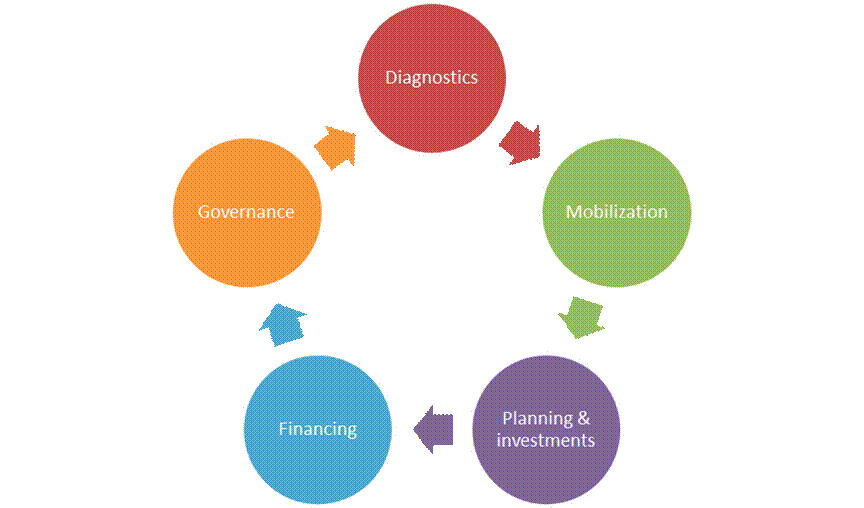
The details are given below:
1. Diagnostics
A survey was conducted to collect the data at individual as well as institutional level regarding Water, Sanitation and Hygiene practices. Training was imparted to SERP functionaries, which emphasized on the importance and process of the baseline survey. Participants of training were Community Resource Persons (CRPs), Master Trainers (MTs) and Assistant Project Managers (APMs).
The data essentially presented the prevailing circumstances regarding status of toilets, drinking water facility in the GP, solid & liquid waste management, service delivery, service utilization and behavioral practices of the individuals and community as a whole. It was understood that 45% of the total HHs have bathroom in their houses but only 25% have toilets. More than 50% of the total population washes their hands only with water while 30% use bathing soap and remaining 20% use detergent for washing their hands. Only 25% of the total HHs have access to functional liquid waste management system provided by GP while others were letting out- the liquid waste on the road or in an open plot. Approximately 95% of the total HHs were dumping HH solid waste near their house.
While talking about institutional toilets, all the four schools had dysfunctional toilets. There were two anganwadi centres and neither of them had toilets. All the government/CBO buildings like VO building, GP building, Gopal Mitra Bhavan (veterinary hospital), were without toilets.
Gram Sabha
- Presentation of analysis to CBOs, Village Health Sanitation Nutrition Committee and Panchayat: The analyzed data is then presented to all the villagers in the gram sabha. Discussion follows the presentation in which the current situation and gaps are brought to forefront and then the community identifies doable activities under the facilitation of District Project Manager (DPM)/ APM/ CRP for achieving 100% Open Defecation Free (ODF) status and Solid- liquid Waste Management (SLWM).
- Resolution on WASH: Community passed a resolution for achieving the Open Defecation Free status by constructing the toilets and using them afterwards. It is decided that VO will be the implementing agency and will manage the finances with support from the Gram Panchayat. It was also decided that while major funding for construction of toilets would come from SERP, the community would also contribute onetime payment of Rs. 500 per household for either construction or repair and will provide unskilled labor. A standard size of 4 x 6.6 feet was set for bathroom cum toilet structure with two leach pits. It was decided if any individual household wanted to make any modifications in the material, size or shape, they would have to bear the extra cost.
Formation of Village level committee &sub-committees
As the program was community led, there was one GP level WASH committee and three subcommittees at village level for managing the program. Each subcommittee included five members and it was ensured to elect representatives different caste & habitation to ensure representation from different sections of the community.
The Village level committee included Sarpanch, VO president, Ward members and Field Level Workers (anganwadi worker, auxiliary nurse midwife and accredited social health activist residing in the village) was part of this committee. This committee was responsible for collection of community contributions towards capital costs, both in cash and kind (land, labor or materials), opening and managing a bank account for cash deposits and project funds etc. This committee was supported by a sanitation assistant (CRP) who was selected by VO to carry out these tasks.
The brief about the three subcommittees is given below:
- Mobilization & Vigilance committee members were responsible for coordinating activities for spreading awareness, reviewing and monitoring the construction of toilets, ensuring usage of toilets and developing ways to monitor the usage of toilets.
- Procurement committee looked after the bulk procurement of raw materials, MOUs between VO and different stakeholders like mason, raw material manufactures/suppliers etc. The subcommittee was also responsible for storage and distribution of the material. They also handle the payments to each of these for the services and material they provide.
- Construction committee was looking after the construction status and quality of toilets and ensure that the toilets were constructed in the stipulated time.
2. Mobilization
Mobilization was an ongoing process and started from the first day itself. It was understood that Information, Education and Communication (IEC) is the key element and emphasis was on awareness generation, triggering behavior change and demand generation for sanitary facilities. Since Open Defecation Free villages could not be achieved without all the households and individuals conforming to the desired behavior of toilet use, every day and every time, community action and generation of peer pressure on the outliers were the key. Therefore IEC was focused on triggering the entire community. Major initiatives taken for mobilization were:
- Exposure visit to a model village: An exposure visit was conducted to Nirmal Gram village, Himmatraopeta of Kodimiala Mandal, Karimnagar district for a team which included Sarpanch, VO members, SERP’s staff etc. The purpose of the visit was to make them realize the importance of community led action to achieve ODF status and orient them regarding implementation of WASH plan at Household and institutional level.
- Exposure visits to NIRD: A team of 15-20 people including sarpanch, VO members, SERP functionaries, masons from Thimmapur were taken to Rural Technology Park (RTP), National Institute of Rural Development (NIRD) to see various models of toilets constructed in various parts of rural India and different technologies used. The community found use of eco-friendly mud bricks for construction, water less odourless toilets very interesting in particular.
- Construction of model toilet was initiated in VO building & in scheduled caste colony for demonstrating the size, shape, quality and cost of the toilet which helped community in taking informed decision. VO started it in SC colony with a belief of “putting the last first” and constructed a toilet for a destitute single old lady.
- Community Led Total Sanitation (CLTS) triggering exercise: An extensive exercise about CLTS triggering spanning two days was conducted in the village in order to mobilize people around WASH. The first day started with transect walk in SC colony for understanding the demography of the colony which included identification of residential area, government building, schools, and water sources, open defecation places in the colony. A demonstration on hand washing was conducted in all the four schools in the GP. In the evening the team did a transect walk in Thimmapur BC Colony and in Anantsagar habitation. At night, a social mapping exercise was conducted near VO building followed by a discussion over the sanitation issue.
On the second day, an early morning transect walk was conducted to open defecation areas followed by day-long discussions with sarpanch, ward members, Village Organization OB, field assistant, SERP employees for deciding the further action plan for achieving the Open Defecation Free (ODF) status.
- The school has become a champion for change, improving its student’s quality of life in their school and their homes. A rally was organized for putting stress on hand-washing at relevant times, Use of garbage bins/buckets for disposal of wet and dry waste respectively, use of toilets/bathrooms etc. School children and SHG women participated in the rally. Activities included discussion on health and hygiene issues, hand washing with soap following the five steps and teachers administrating pledges to students. SHG women motivated people for toilet construction and usage by slogans while roaming around in the village.
- Kalajatha: Kalajaha is a popular, traditional art form of folk theatre depicting various life processes of a local socio-cultural setting. It was used to create and sustain the demand for toilets and hand washing in Thimmapur and was an effective medium of mass communication. Kalajatha events were performed in the evening hours in Thimmapur. Ten artists were trained and provided with necessary equipment in order to perform. It was observed that there was a change in knowledge and attitude about WASH and need of toilets and the demand for toilets has increased exponentially.
- Videos: SERP, in collaboration with Digital Green, produced videos to disseminate the knowledge regarding WASH. Kalajatha artists were trained on usage of videos during their performance in order to mobilize and sensitize the community for need of toilets, hand washing, construction and usage of toilets etc.
3. Planning & Investments
A planning exercise was done by the WASH committee to estimate the material and masons required. The numbers of new toilets to be constructed were 277 and total toilets needs to be repaired were 42. The committee estimated the total material to be purchased. Negotiations for bulk procurement of raw materials like cement bricks, cement, bricks etc was initiated at different levels. Village procurement committee negotiated at village and mandal level, the district team negotiated on district level and state team on state level for bulk procurement of materials. A separate bank account was opened for this activity with VO members as a signing authority. The committee also laid down rules to be followed, which were:
- At least 4 out of 5 members from the committee must go for negotiations with suppliers/manufacturers and at the time of purchase too.
- Community must pay to manufacturer/supplier with cheque only & when he/she provides the bills or vouchers. A fixed day must be decided for payment and all the stakeholders must be present on that day for payment and discussing the further action plan.
- The process for the release of material will be in the order given below;
- HH must dig twin pits
- HH must bring rings & rings cover from the manufacturing site
- HH must collect all other material from the VO
- VO will provide mason for construction of toilets
VO must provide the material within two days HH dig the pits and bring the rings and rings cover from the construction site. VO must provide material only when the HH shows the payment receipt which he/she receives while making contribution. HH must sign on the register while collecting material in order to maintain HH level record.
- As WASH committee visited RTP, NIRD and has shown interest in construction of mud bricks, VO purchased a mud brick making machine from Banglore. A training for masons and brick manufacturer was conducted to train them on mud brick making. VO identified a SC youth for manufacturing the mud bricks. A toilet with mud brick was constructed in GP building for people to see. Community didn’t accept the toilets constructed with the mud bricks and then the WASH committee decided to go ahead with cement bricks.
- Community were made aware of different technological options like ecosan toilet, fly ash bricks, community urinal etc. Ecosan toilet was constructed in Anganwadi centre. WASH committee realized that if people use toilets in their house but are urinating in public, the purpose is lost. Therefore the community decided to construct wasterless odourless toilet near the bus stand. Community also decided to use fly-ash bricks in order to reduce the time and efforts which goes in construction of toilets. As the time and efforts decreased, WASH committee negotiated with masons and decreased the mason’s charges.
- Committee realized that persons with disability have need for special toilets and decided to build toilets suitable for disable people and provided the required material to the individuals.
- Establishment of ring manufacturing unit in the village: In order to save time and reduce cost, community identified the youth and trained them on ring and ring cover manufacturing. Committee estimated the total materials to be required for construction of these rings and rings cover and provided this material to these skilled labor. Site for manufacturing unit and water for curing was provided by GP. VO identified a house near the manufacturing site for storing the materials.
4. Financing
SERP released the funds directly to the account which was opened for this purpose. Money was released in two installments. Half of the required funds were released to the VO directly for initiating the construction process. It was decided that once the WASH committee will produce the utilization certificate for 80% expenditure of the first installment provided the next installment will be released. The WASH committee handled approximately Rs. 35 lakh in order to complete the program.
5. Governance
Social accountability and good governance were the key elements in design and were integrated in the process from the start. WASH committees developed different systems for accountability and supervision. These included shared leadership responsibility, consensual decision making, public disclosure of accounts etc. Different measures were taken by the community in order to make the processes transparent. Some of the initiatives were:
- As the program was community driven, to maintain the transparency different books of records like minutes of meeting book, community contribution register, stock register, HH wise material distribution register, cash book, general ledger etc were introduced.
- A fixed day (Friday) for meeting was decided wherein all the stakeholders like WASH committee and sub committees, Sarpanch, Panchayat secretary, masons, manufacturers, suppliers, SERP’s staff used to participate in order to monitor and review the progress of the work, the status of availability of material, construction, quality and facilitating the WASH committee in clearing the payments of supplier/producer and planning for the next week.
- After the construction of toilets, an acknowledgment with a photograph of the owner/beneficiary (Head of the HH) was received from each Household (HH) with Aadhar card number, material and quantity of material received, date of toilet construction started, date of completion of toilet construction and signature.
- A ‘nigrani’ committee was constituted in village in both the habitations for regular follow-up, particularly during the morning and evening hours when people normally resort to open defecation.
- An internal ‘ODF’ audit by Zila Samakhya (District level CBO) and SERP’s district staff was conducted, and suggestions were given to village level WASH committee. The committee incorporated the suggestions to achieve ODF status.
Outcomes
SERP realized that while working on WASH, there will be impact on outcomes like health of the community as sanitation is directly link with health, capacity of the community will be built as community was exposed to different technological options and manage the program on their own and on livelihoods as with increased demand for sanitary services; masons, manufacturers, sanitary marts etc. became the key players resulting in the increased livelihoods of the community.
Village Organization in collaboration with gram panchayat installed dust bins all over the village and mobilized community to use those dustbins. Gram panchayat took the responsibility for maintaining those dust bins. Community is also planning to work on liquid waste management too.
This program also activated the line departments and panchayat in the village and toilets have been constructed in two schools in the village. District administration also sanctioned 8 mini water tanks in the village in order to increase the availability of safe drinking water. Panchayat also constructed roads in Thimmapur habitation and SC colony and is planning to start the construction of roads in Anantsagar habitation. GP is also planning to start the old age day care centre in the village which will be managed by the gram panchayat.
Lessons learnt for scale up
Thimmapur adopted community owned and community saturation approaches. The availability and access to materials is often dictated by existing hardware suppliers. Communities are thus heavily dependent on contractors and middlemen. Hence, improving the basic dynamics of the supply chain by removing middlemen has brought greater success to the program. The materials necessary for building toilets have been made affordable and reach households in a timely fashion. Freedom of choice has been another salient feature of development. Rural households were provided various options from which to choose.
Some of the key lessons learnt and the crucial factors for the success of program are:
- Training and capacity building of all the stakeholders
- Ensuring timely supply of materials
- Freedom of choice for the toilets
- Linking WASH with livelihoods
- Regular review and monitoring
The learnings from Thimmapur have been shared with 11 other pilot GPs across the state and is planning to scale the project in 1000 GPs in coming year. SERP realized that IEC is one of the major elements of the whole process and is training masons groups, Kalajatha performers and CLTS facilitators.
Community voices
- “I had grown up seeing my family practice open defecation – regardless of the season, time of day or situation. We had no other option, and I had accepted that. But now that I have a toilet in my house, I understand how unsanitary the practice was,” says K. Laxmiamma, the oldest woman of the village. She adds, “All of my friends are now dead but I am sure that if had they been around, they would have been happy knowing that all the houses in the village have toilets and people are using the toilets, It was a dream for us”
- Krishna, 25 years old, is an auto driver and had dysfunctional toilet in his house. A father of 15 month old kid, his daily income is Rs. 200/-. He got his toilet repaired in this project and was very happy. He recalled how he had to spend his 12-14 hours a day for work and how he had no choice but to urinate in the open due to lack of any public sanitation facility in the village. He said, “The sight of people urinating around the bus stand was common but since now VO has constructed a urinal with the help of Panchayat, I don’t find people urinating in open. I am very happy. Many a times, I have had passengers asking me to stop near the fields so they could relieve themselves! But not anymore”
- B. Pentamma, the VO leader from Ananthsagar, believes in following her vision, trying the untried, and raising the bar to reach higher. Thanks to never-say-die attitude of B. Pentamma and other women of Thimmapur who led their community to using toilets regularly and towards an Open Defecation-free future. Along the way, these women have generated new streams of income for the villagers and turned their village into a cleaner and safer place to live. “I had a toilet in my house but I realized that if not everyone in the village will use the toilet, it will have negative impact on our lives. It was not easy to mobilize men to construct the toilets as they didn’t find the need of a toilet but with regular meetings and with the help of SERP staff, we were able to achieve what we dreamt of”, beamed Pentamma. She adds, “There was time when we were running out of the raw material due to high demand. It was then that we decided to manufacture the rings and rings cover in the village in order to decrease cost as well as save time.”
- Ramaya, a 15-year-old had made a giant stride, challenging the age-old practice of open defecation in Thimmapur. Open Defecation was common practice in this village. There were frequent outbreaks of water-borne diseases such as cholera, diarrhea and dysentery. Ramaya had to walk more than 10 minutes to an open field to relieve herself, with no privacy from passersby. She was already smarting under this feeling of shame when her teacher opened her eyes to the health hazards of open defecation. Ramaya was alarmed to learn about the connection between water-borne diseases and open defecation. “I learned about the program initiated by VO and decided to have my own toilet at my house. I convinced my father to pay the community contribution of Rs. 500/-. When the material arrived, I carried the bricks and other material on my head and constructed it because it was my toilet. Today I have my own toilet and I am very proud to say that it is the result of my efforts.”
- Navya Gaud is the newly elected gram sarpanch of the village and had a toilet at her house. Availability of toilets to each HH was her agenda and as soon as she got information about the program by SERP, she showed interest in the process. She attended meetings and campaigned to raise awareness. She, along with her husband Suman Gaud, met with families and discussed about the modification of the model to fit the available space in their house. She oriented several beneficiaries about WASH practices and proper toilet use and maintenance. When asked about her motivation she replied. “Earlier many people doubted my interest as a way to earn money. I replied yes, I have my interests, I am a woman and can understand the issues involved when women don’t have a toilet in their houses. Women were embarrassed, and often had to trudge long distances seeking a ‘private’ spot to relieve themselves. The practice had transformed even the area around the Panchayat office into one huge open-air toilet. Now every household in the village has toilet. Also, to keep our village clean, we have established dustbins at strategic points in the village and we constantly encourage people to use the dustbins and toilets.”
- Self-trust, people say, is the first secret of success. If true, it is perhaps the most shared secret among the members of the WASH Committee. Despite being bogged down by obstacles at every turn, the women from WASH committee never let the fear of failure stop their march forward, and ensured Open Defecation free status for their village. Through their participation in the program, the WASH Committee members have gone from just being homemakers to being confident, empowered advocates who are not afraid to take on the unknown. “We never thought we could ever participate in such a noble cause. We lacked experience. But now we are successful. We have collectively done so many things earlier too but constructing toilet and motivating people for using it was the biggest successful movement that we were carried on our shoulders. The support of Sarpanch and SERP’s staff helped us achieve a task which looked insurmountable earlier” says Kanakmma with pride, a member of the WASH committee.
- D. Pentamma is an old widow and lives in a hut. She works as an agriculture labor and in the morning hours she works as a sweeper in the school. She got her toilet constructed under this project. “I don’t have pakka house but I understand the value of a toilet. I faced lot of problems and was embarrassed while going out for defecation.” Said Pentamma. She added further, “House is important so is toilet. I am thankful to VO for helping me to build my own toilet. I can live with dignity and respect now.”
[1] NDCCs serve as a community-based centre not only for women to receive daily complete meals, but also, to receive ante-natal care, post-natal care, immunization, growth check-up and education on health knowledge to promote healthy behavior. As the NDCCs are owned and managed by the communities they serve, the NDCCs are receptive to the demands of the beneficiaries.
.


Leave a Reply