Last weekend, we took our daughter to Ameen for the first time. Ameen is my mother’s ancestral village in Kurukshetra district, Haryana. The government renamed it Abhimanyupur. Abhimanyu, the young warrior and son of Arjun is said to have died in this village during Mahabharat. We all still call it Ameen.
It was a couple of days filled with good food, laughter, and family gossip. I ate more parathas with desi makhan than I had in a month. My mother used to bring my sister and me to Ameen almost every summer vacation when we were children. My cousins would take us to the fields, we would ride the buggi, sit on the back of the buffalo, eat until we could not move. They made fun of us constantly- the Kanpuriyas (On the name of my hometown) who could not understand the language.
The memory we fondly remember is of roti. My cousins would say “roti paado” meaning give the bread, and my sister and I would look at each other in confusion and laugh. In our language, paado means something entirely different. It means fart. We could not understand why everyone kept asking the bread to fart. We used to shout: “Arre, roti thodi paadati hai”. Our cousins would laugh hysterically every time. We laughed too.
I just loved going to the fields with mamaji and my cousins in the morning-spending the first half of the day there, and then bathing at the tubewell on the way back if the power was on, or at Surajkund if it was not. In the evenings my cousins and I would take our animals to the chappar (a small water body) for their daily bath.
This visit, we went to Maa Bhadrakali temple and Brahma Sarovar in Kurukshetra among other temples. We also visited the old Shiva temple in the village. It is built on Surajkund, where they say Mata Aditi and Kashyap Rishi did their tapasya. My mother always points out the boundary wall with quiet pride. Her father, my nanaji, got it built when he was sarpanch.
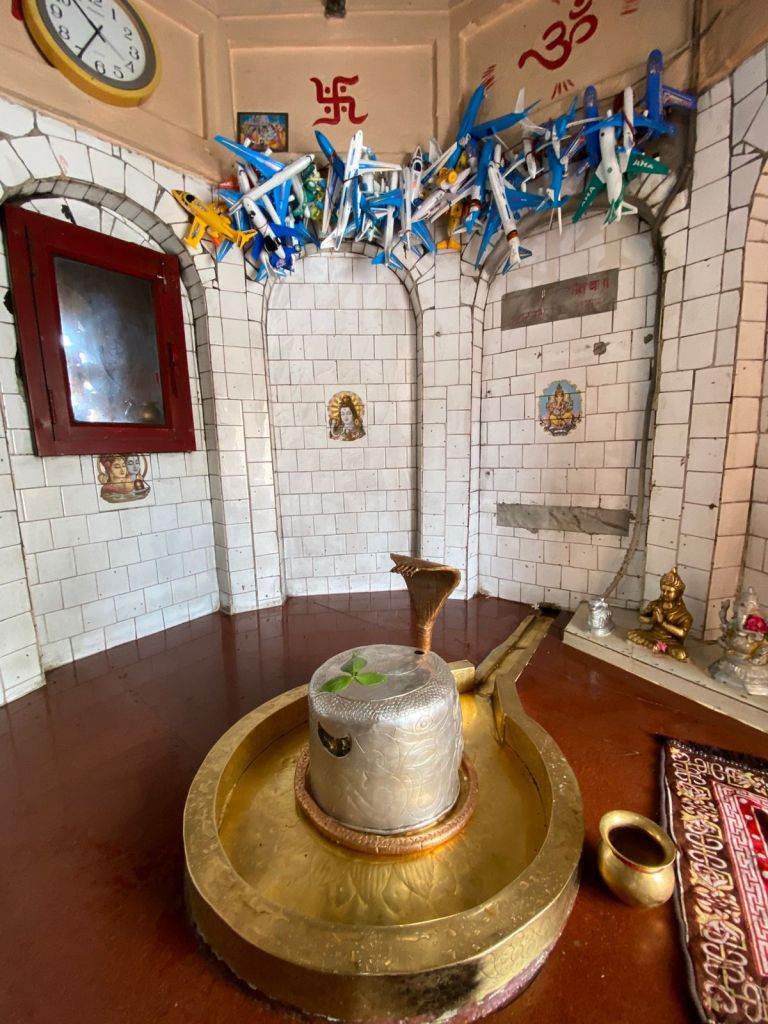
I have visited this temple since I can remember. My last visit was in early 2024. But this time something was different. Dozens of toy planes hung from the ceiling of the temple.
I asked my cousin what had happened.
He told me that over the last year or so, families of young men from the village who had made it to the US (in most of the cases), Canada, or Europe had started hanging toy planes as offerings. A thank you to Lord Shiva for seeing them “safely” to the other side. Safely is the right word. Almost all of them had gone the dunki way- the illegal route through Mexico, crossing rivers, forests, and borders on foot.
One of my own cousins tried it. He paid INR 40 lakh to an agent. Out of roughly forty young men who made the journey together, three died along the way. He was caught at the Mexico border, held in prison for more than four months, and sent back to India. The whole thing took six months. He lost the money, and very nearly his life. The chances of safely crossing the border are less than 50%.
Later I sat with the sarpanch sahab and shared a hukkah. He told me that by his count, nearly a thousand young people from this one village are currently outside India- doing menial jobs, sending money home. These are not kids from poor families, and I ask why they go to such a hassle where they could die. He suggested I walk to the newer part of the village. I did. The large houses and the luxury cars told the rest of the story. As per sarpanch sahab’s calculations, every month the village receives INR 6 crore in remittances.
This is not unique to ameen or nearby villages. During my time in US, more than half my cab drivers were Indian, mostly from Haryana and Punjab. Many had not been home in five to seven years. They missed home but knew that their family back home were prospering.
The toy planes hang in the temple. Lord Shiva watches. The village prospers. And I keep wondering at what cost?


Leave a Reply